
Creative Director
Project Overview
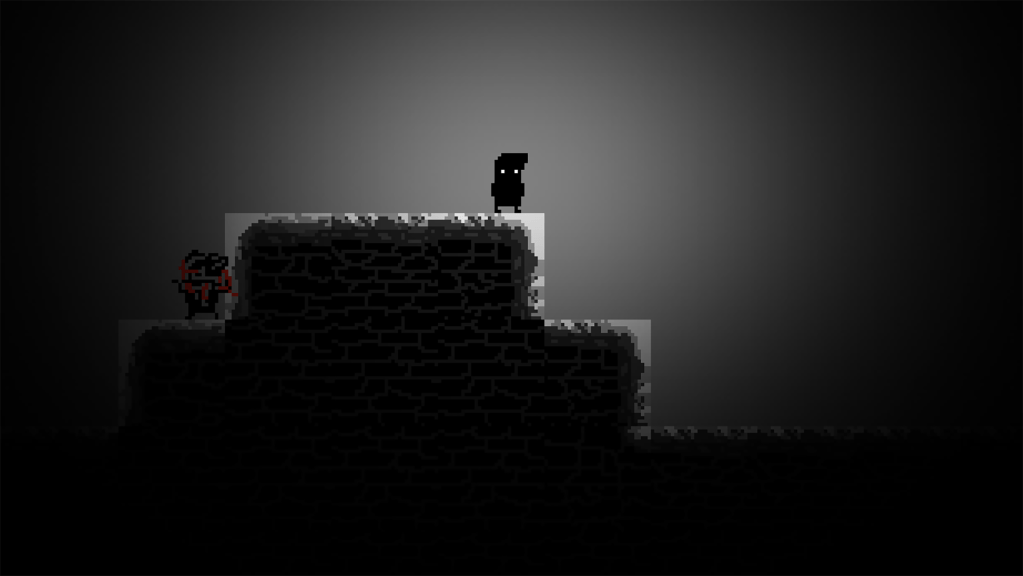
YAMI is a single-player horror platformer where players use a flashlight toggle mechanic to navigate darkness, balancing visibility with the risk of attracting enemies. The goal was to create an immersive experience of fear and uncertainty, requiring players to strategically manage light while relying on memory and bravery to progress. The core design challenge was ensuring that the tension between light and danger remained central to the gameplay.
Key Responsibilities
Gameplay and Mechanics
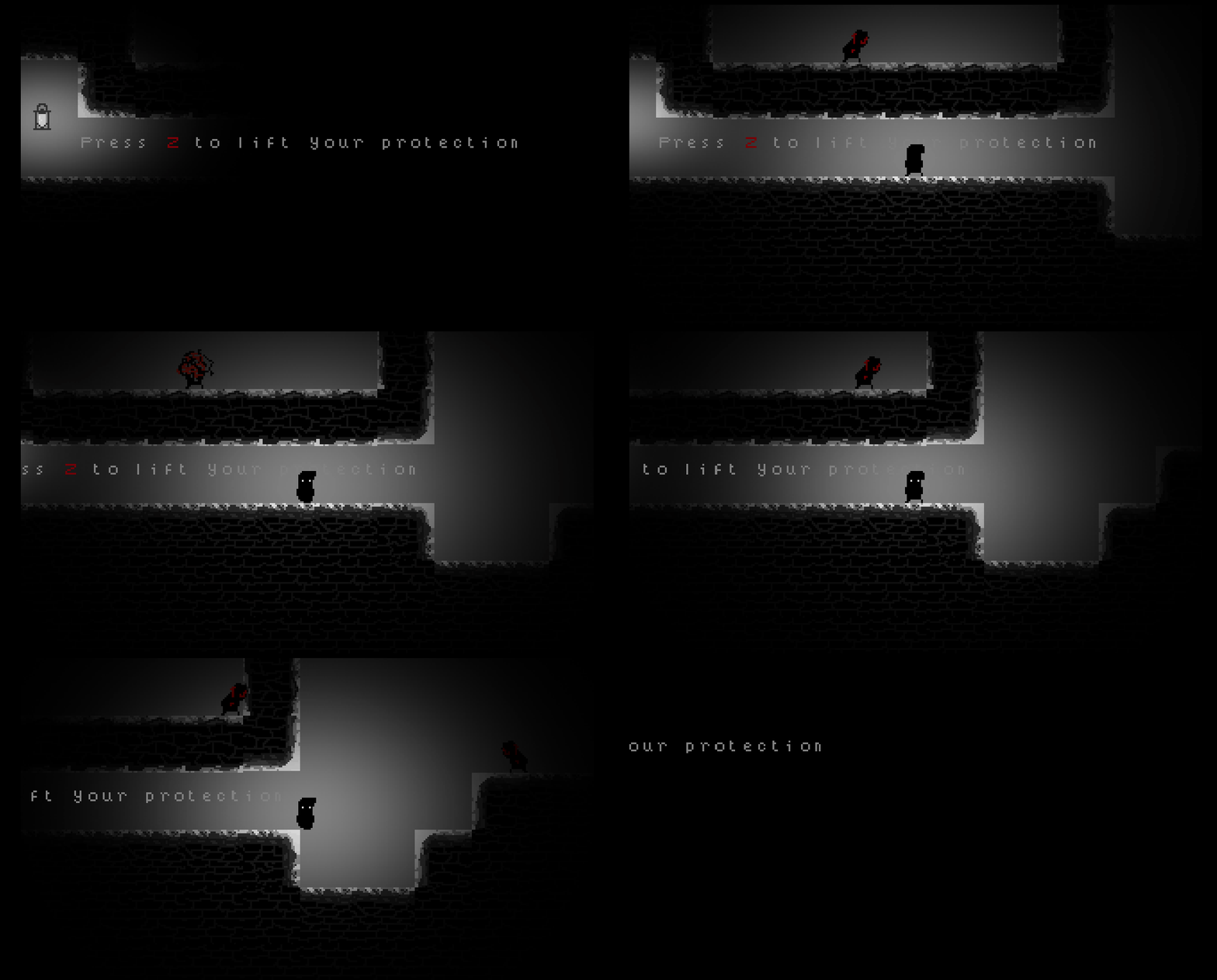
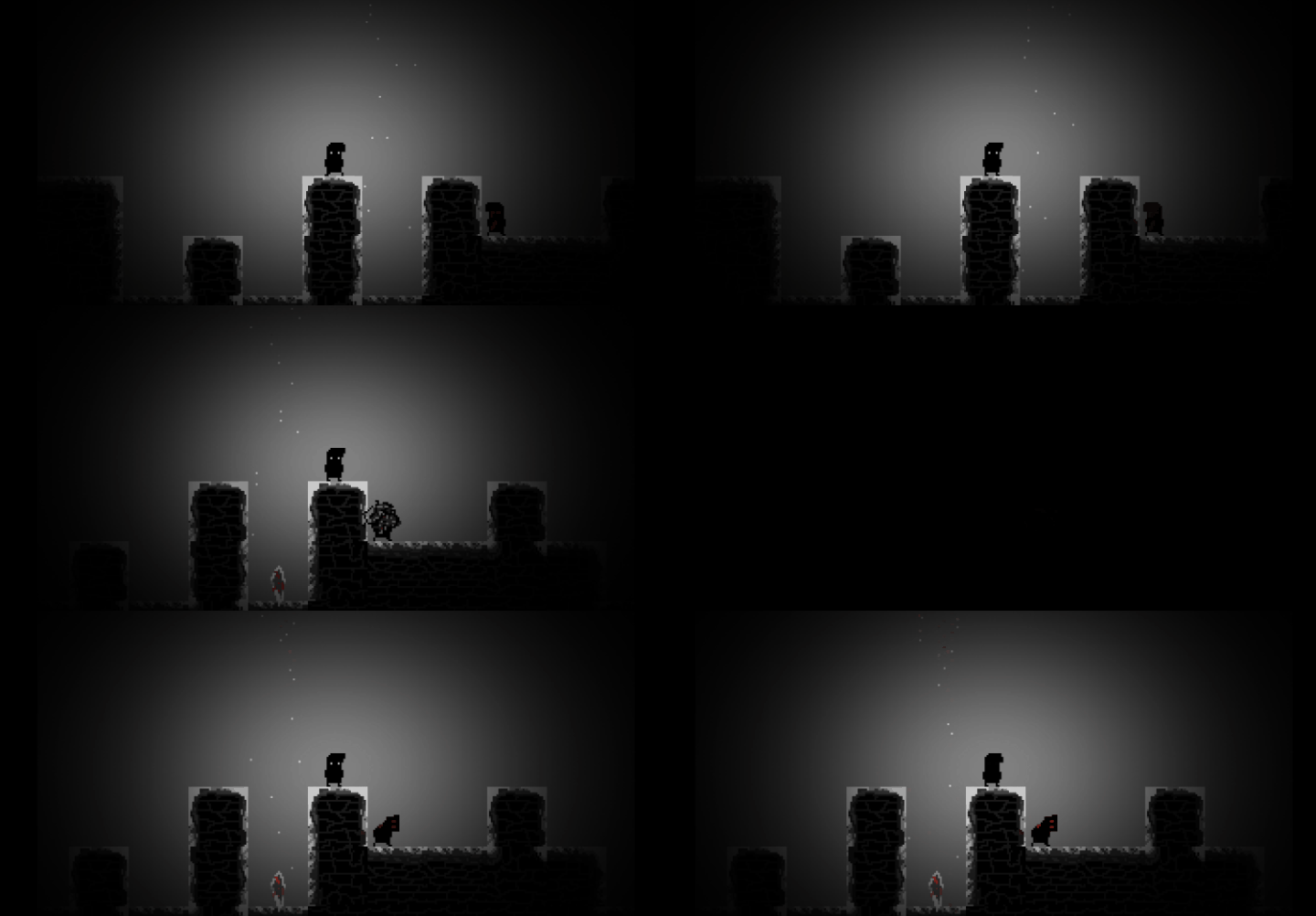
The core mechanic of YAMI is the flashlight toggle, which allows players to briefly illuminate the environment at the risk of drawing the attention of ghouls. The challenge lay in creating a tense atmosphere where players needed to balance the limited use of the flashlight to see their environment while avoiding enemy detection. I designed the mechanic to keep players on edge, always weighing the benefits of visibility against the danger it attracted.
Diegetic Tutorial for Maximum Immersion
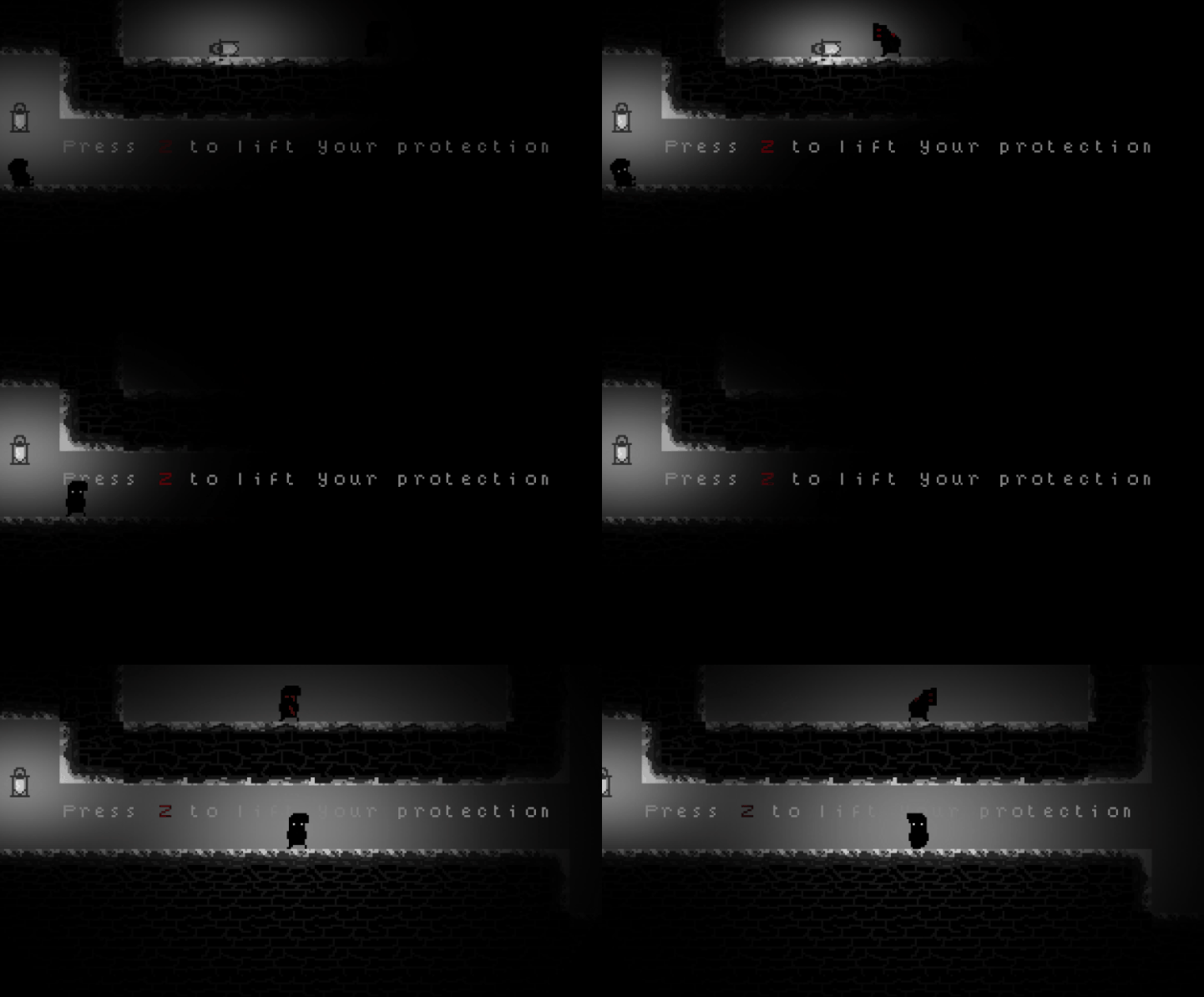
For YAMI, I designed a diegetic tutorial to ensure that players remained fully immersed in the game world. Rather than using intrusive pop-up windows or menus, I integrated the tutorial into a diegetic cutscene followed by a safe playground where players could experiment with the game’s core mechanics, such as the flashlight toggle and movement. This allowed players to learn through natural gameplay, enhancing immersion and reinforcing the tense atmosphere. By experiencing the tutorial within the game world, players were kept engaged and immediately drawn into the mechanics without breaking the narrative flow.
Art and Visual Support for Gameplay
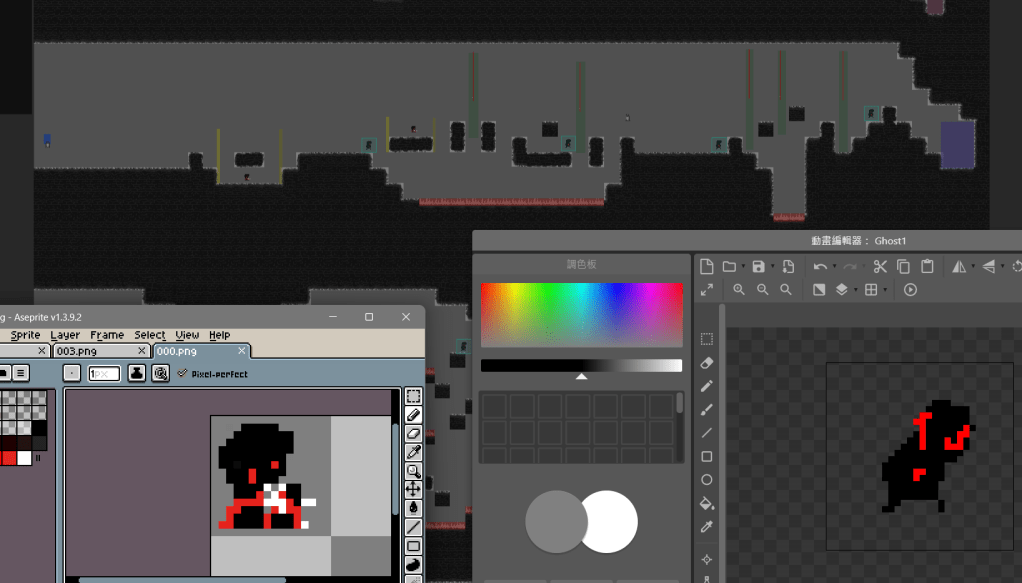
As the game’s artist, I designed all the visual assets for YAMI, from the characters and enemies to the environmental elements. The art was crafted to support the game’s core mechanic—using a limited, moody color palette to maintain the oppressive atmosphere of darkness. By focusing on stark contrasts, I ensured that players could quickly assess their surroundings, even in brief flashes of light.
To aid the level designers, I created modular assets using Tiled, allowing them to easily build and modify levels. The flexibility of this system was key to maintaining consistency across different levels, ensuring that the visual design supported both gameplay mechanics and the horror theme. I also developed a detailed wiki that outlined how the visual elements should be used in conjunction with gameplay, providing the level designer with clear guidelines to create cohesive, functional levels quickly.
Enemy Design and Behavior
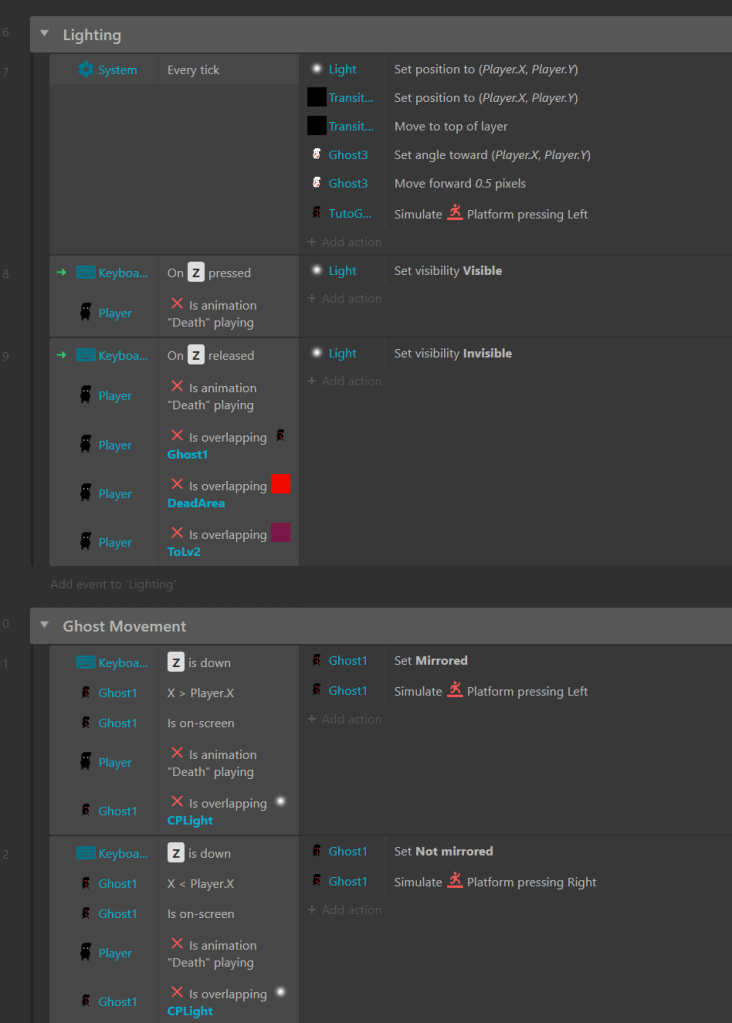
Given the constraints of using the free version of Construct, which limited me to 100 event lines, I had to be extremely efficient in programming all enemy behaviors, environmental hazards, and levels. Despite these restrictions, I successfully designed the ghouls to react dynamically to the player’s use of the flashlight. The ghouls became more aggressive the longer the light was on, adding tension as players balanced their visibility against the risk of attack.
I had to creatively structure the game’s core systems to fit within these limitations, optimizing every event line to manage the enemy AI, hazard interactions, and level progression without compromising on the intended gameplay experience. This required a deep understanding of Construct’s capabilities and a careful balance between complexity and efficiency.
Level Design and Puzzle Integration
The level design in YAMI was crucial to maintaining the game’s tense atmosphere. Using Tiled, I created complex levels that combined platforming challenges with environmental puzzles. These puzzles required players to interact with objects in near-total darkness, pushing them to toggle the flashlight at just the right moments while avoiding enemy encounters.
To enhance the player’s awareness in the dark, I integrated audio cues that alerted players when they were in danger or near hazards. This use of sound provided essential information about the level, even when players couldn’t see their surroundings. The combination of auditory feedback and brief visual glimpses created a heightened sense of tension and encouraged players to rely on more than just their sight to navigate the environment.
I organized levels with visual landmarks and audio signals to guide players, helping them maintain their bearings while still feeling the pressure of being lost in a dark, hostile world. The level layouts were carefully designed to challenge players’ memory and timing, forcing them to think strategically while balancing light and danger.
Showcase Recognition
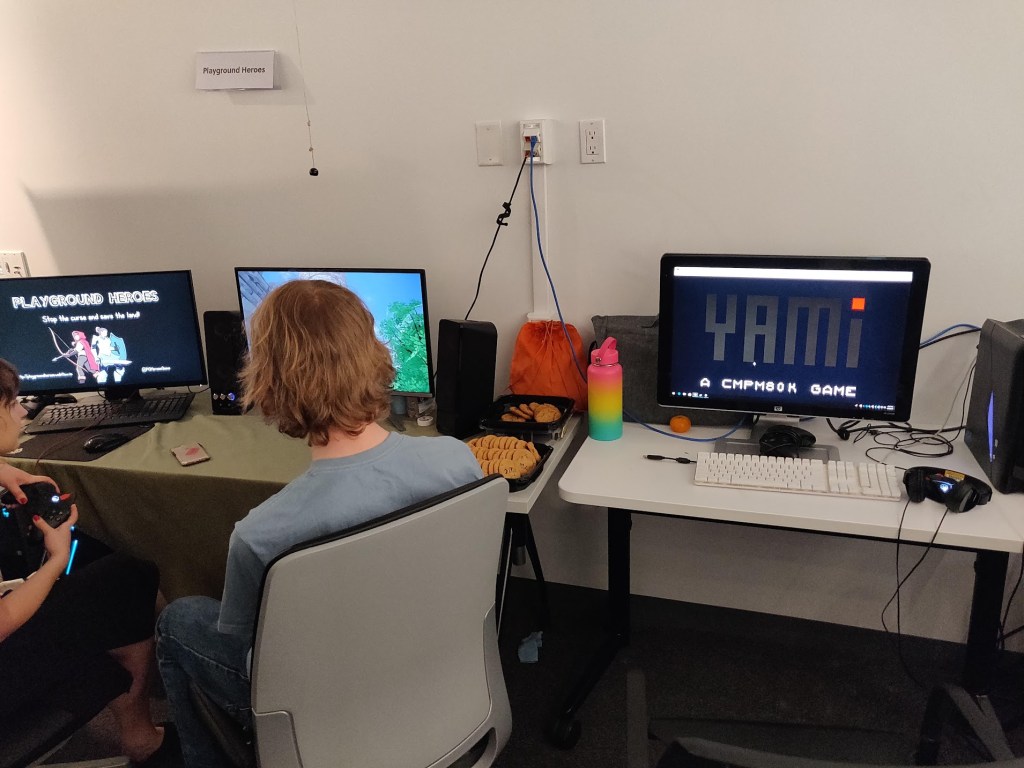
YAMI was showcased at the UCSC Sammys Games Showcase, where it was praised for its innovative mechanics and the seamless integration of horror elements into the gameplay. The unique balance between tension, fear, and strategic decision-making was highlighted as a key strength of the game, making it a standout at the event.
Key Achievements
- Designed and programmed the flashlight toggle mechanic, creating a core gameplay system that heightened the suspense and required strategic thinking.
- Developed all the game’s art assets, using a limited color palette to create atmosphere and support gameplay.
- Designed a diegetic tutorial, allowing players to learn core mechanics through immersive in-game experiences rather than pop-up windows or menus.
- Created detailed levels using Tiled, while also documenting design principles in a wiki to streamline collaboration with other designers.
- Programmed all core systems, including the flashlight toggle and enemy AI, ensuring smooth integration of mechanics and visual design.
- Used Agile development practices to manage the project, gathering feedback through Google Surveys and iterating on mechanics and level design based on player feedback.
 Qianhao Tang