
Game Design Programmer
Project Overview
Love Heist Romeo is a narrative-driven 2D exploration game that takes players through three emotionally charged levels: Fancy Town, Jealous Sea, and Reject City. As the Game Design Programmer, my focus was on creating game mechanics that both reflected and enhanced the story’s emotional themes, while ensuring an engaging player experience through dynamic gameplay.
Key Responsibilities
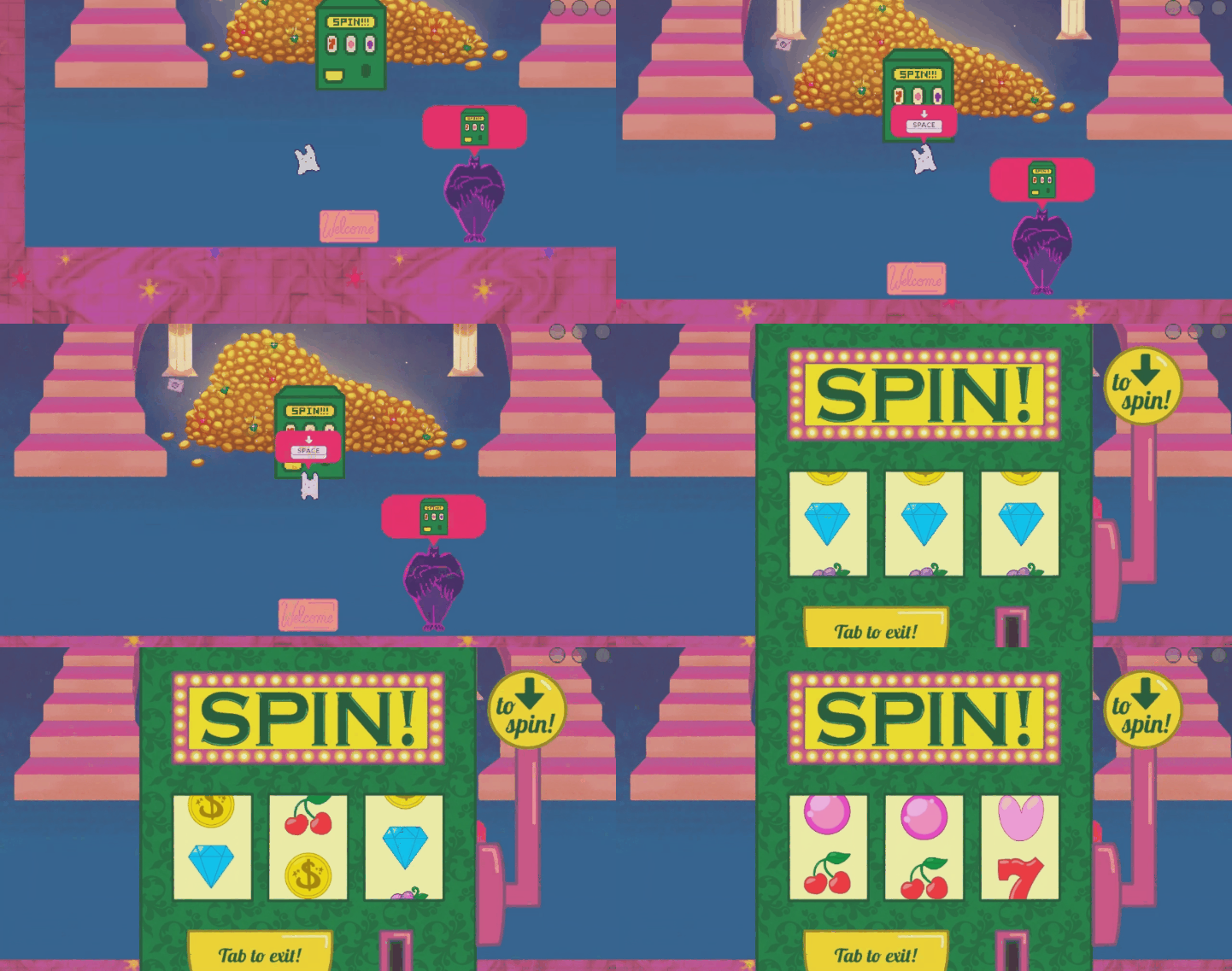
Fancy Town: Endless Pursuit of Material Desires
In Fancy Town, the core theme I wanted to explore was the endless pursuit of material wealth, symbolizing how people can endlessly chase after what they desire but never truly feel satisfied. To reflect this theme, I designed a dynamic slot machine mechanic, where players are required to collect coins scattered throughout the level and use them to draw from the slot machine, pushing the narrative forward.
The slot machine isn’t just a random luck mechanic; it’s built to ensure players engage with the theme of delayed gratification. At the start, the probability of winning is intentionally low, ensuring that players do not succeed too early. As time progresses, the chances of winning gradually increase, creating a gameplay arc where the pursuit feels increasingly rewarding. This dynamic system allowed me to give players a feeling of accomplishment while reinforcing the game’s central theme of material desire and the frustration of chasing unattainable goals.

Jealous Sea: The Tension of Power Imbalance
In Jealous Sea, I wanted to portray the complexities of relationships—particularly the imbalance of power where one character feels consumed by jealousy and control. To achieve this, I designed a stealth mechanic using a raycast-based vision system, where players must navigate a world while avoiding detection by a patrolling boss. The boss represents the overwhelming presence of jealousy, constantly watching, forcing the player to study and learn its patrol patterns in order to progress.
What makes this system unique is that it creates a strong emotional parallel to the narrative. Players are restricted in their movement, symbolizing the feeling of being trapped in a relationship defined by control and jealousy. The tension builds as players balance their desire to move forward with their need to avoid detection, mirroring the character’s emotional struggle. Each patrol route was manually crafted by me, ensuring that the tension escalates in meaningful ways as players advance through the level, providing a layered experience of learning, mastery, and emotional engagement.

Reject City: The Pain of Rejection
Reject City was designed to explore the theme of rejection—both the literal and emotional kind. I wanted players to feel the frustration of being constantly blocked from achieving their goals. The main mechanic here is a puzzle system, where players must solve puzzles while being constantly obstructed by a boss, representing the ever-present barrier of rejection.
Unlike traditional puzzle mechanics, the boss’s interference is integral to the emotional experience. Players are given just enough space to start solving a puzzle before the boss disrupts their progress, forcing them to start over or rethink their strategy. This constant interruption reflects the emotional toll of rejection, where every step forward feels met with resistance. The puzzles themselves are simple enough to solve on their own but become much more difficult in the presence of the boss, creating a heightened sense of frustration and urgency that reinforces the theme of the level.
Design Philosophy and Player Experience
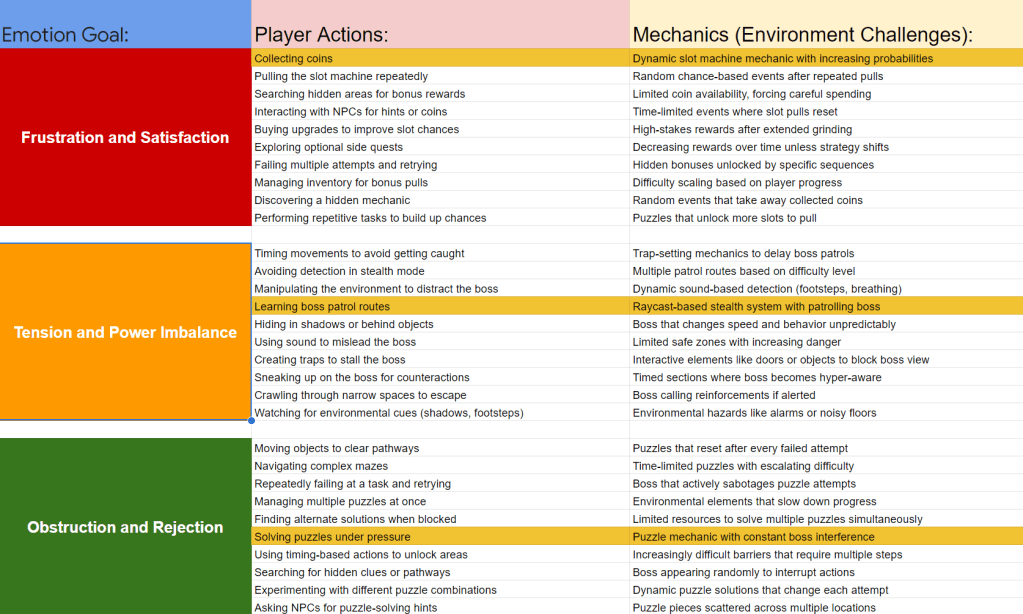
For each level in Love Heist Romeo, I designed the gameplay mechanics to amplify the emotional experience. To achieve this, I used a structured approach where I mapped out the emotional goals for each level, identified the player actions that would evoke those emotions, and developed corresponding game mechanics or environmental challenges to reinforce them. This method allowed me to align the gameplay closely with the story’s emotional arcs, ensuring that mechanics like frustration, tension, and rejection were felt naturally through player interaction. By balancing these emotional elements with gameplay engagement, I created a cohesive experience that kept players invested in the narrative without overwhelming them.
Agile Development and Iteration
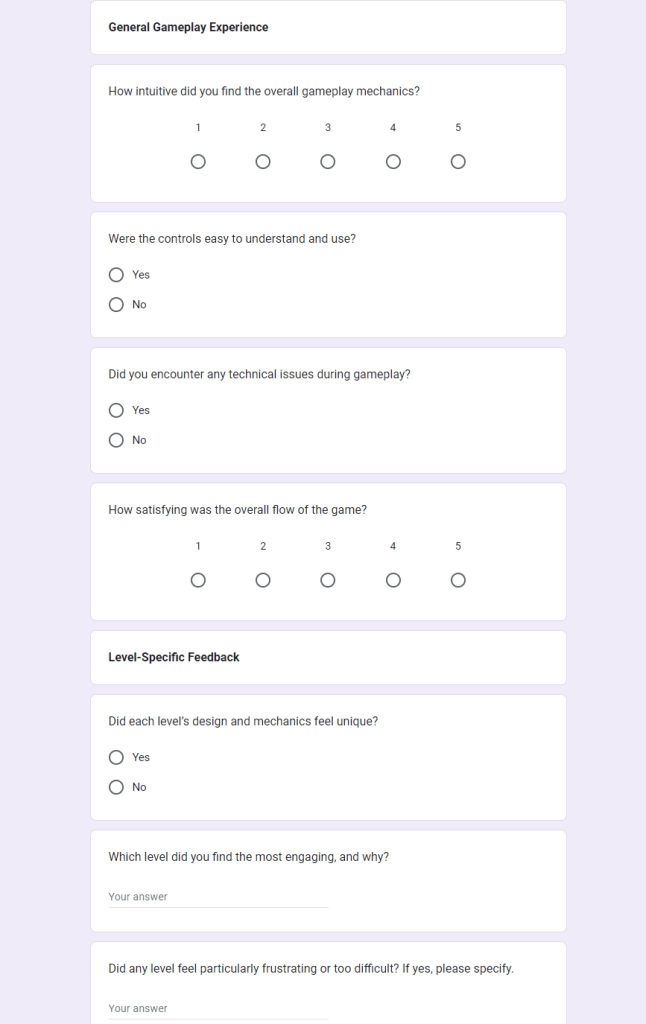
Throughout the development of Love Heist Romeo, I followed an Agile methodology, using a structured, sprint-based approach for design and iteration. Each week, I conducted playtests to gather player feedback, which I collected and analyzed using Google Surveys. This allowed me to efficiently capture valuable insights from testers, focusing on how well the gameplay mechanics aligned with the emotional goals of each level.
After each playtest, the feedback was reviewed and used to iterate on key mechanics, ensuring that they evolved in response to player experiences. For instance, if players found the stealth system too punishing or the slot machine mechanic too repetitive, adjustments were made during the next sprint. This continuous feedback loop allowed me to refine the game incrementally, balancing challenge and reward while maintaining the emotional depth of the narrative.
By using this data-driven approach, I was able to quickly identify areas needing improvement and implement changes, ensuring that the mechanics supported the story and player engagement was sustained throughout development.
Key Achievements
- Designed and implemented a dynamic slot machine mechanic that tied directly into the theme of material pursuit in Fancy Town, offering players a rewarding progression system that mirrored the emotional stakes.
- Created a raycast-based stealth system in Jealous Sea that symbolized the tension and control inherent in relationships, allowing players to experience the emotional imbalance through gameplay.
- Developed puzzle mechanics in Reject City that reflected the frustration of rejection, with the boss’s constant interference adding an emotional layer to traditional puzzle-solving.
- Successfully led weekly gameplay testing, using feedback to iterate on mechanics, improve player experience, and ensure alignment with the game’s emotional narrative.
- Worked collaboratively with narrative designers to ensure that every gameplay mechanic was fully integrated into the story’s emotional themes, resulting in a seamless player experience that combined gameplay and narrative.
- Love Heist Romeo received Best Production at the UCSC Game Showcase 2021, recognizing the game’s success in blending mechanical innovation with storytelling.
 Qianhao Tang